
#4 – Selling Emotion – The Triggers Marketers Use (and Abuse) | Over the Bull®
Episode: The Ethics of Emotional Triggers in Marketing Marketing is everywhere. Whether you’re watching a baseball game or scrolling social media, you’re surrounded by emotional triggers crafted to influence your decisions. In this episode of Over the Bull, we dive…
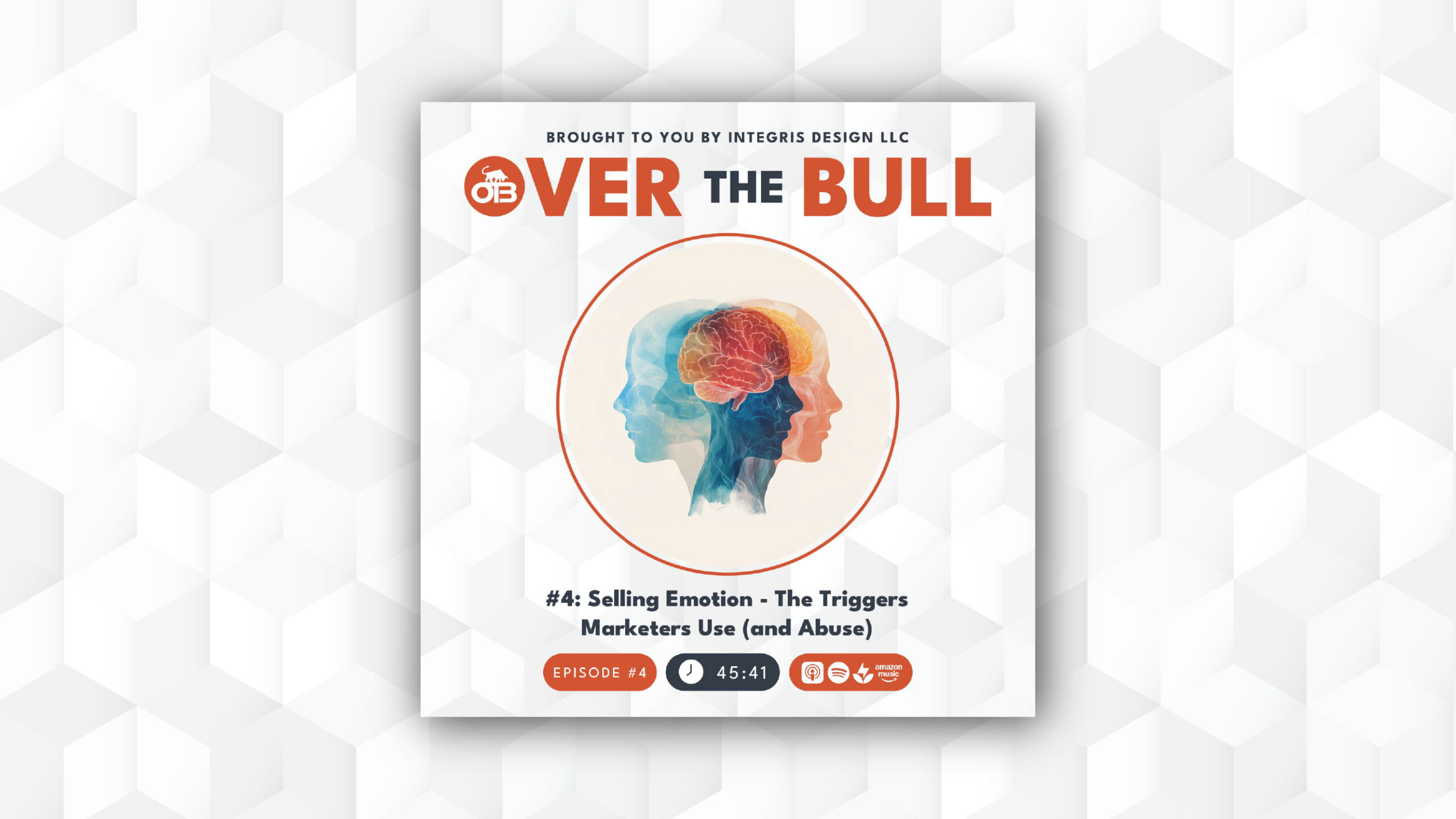
Episode: The Ethics of Emotional Triggers in Marketing
Marketing is everywhere. Whether you’re watching a baseball game or scrolling social media, you’re surrounded by emotional triggers crafted to influence your decisions. In this episode of Over the Bull, we dive deep into the most powerful emotional triggers used in marketing—fear, greed, trust, envy, pride, guilt, belonging, and altruism—and unpack how they can be used ethically or manipulatively.
The Power of Fear and Greed
Fear is one of the most commonly used emotional triggers, especially in pharmaceutical ads. These commercials subtly suggest that not taking their medication could result in severe health issues, then pivot to show smiling families and peaceful settings, implying that using their product leads to happiness and fulfillment. Even the inclusion of side effects, while seemingly a legal necessity, is strategically designed to boost consumer trust.
Greed, on the other hand, plays on our desire for more—more value, more product, more exclusivity. Think flash sales, limited-time offers, or “get one free” promos. While often seen as harmless, they too can cross ethical lines when they’re misleading or exaggerated.
Belonging, Trust, and Pride
Humans are tribal by nature. Marketing that taps into a sense of belonging—whether to a social group, a belief system, or a cultural identity—can foster loyalty. But when done manipulatively, such as large corporations using social causes disingenuously, it quickly becomes unethical.
Trust is earned over time. Certifications, partnerships, and client testimonials all help build it. But slapping “trusted by thousands” on a site with no proof is manipulative. Similarly, pride appeals suggest you’ve “earned” the luxury car or the elite credit card. They stroke the ego to drive purchase decisions.
Envy, Guilt, and Altruism
Envy is a subtle but potent tool. Highlighting what others have—and implying you’re missing out—is the cornerstone of tech ads and influencer culture. Guilt, too, is widely used: “Just $1 a day can save a child” or “Your plastic is killing the planet.” Both can be ethical when rooted in truth, but they often venture into manipulation.
Altruism is perhaps the most noble—and most abused—of the emotional triggers. “Buy one, give one” campaigns appeal to our better nature, but if the giving is merely performative or short-lived, the trust quickly erodes.
Where Do You Stand?
The episode challenges business owners to assess where they fall on the ethical spectrum. Are your emotional appeals genuine? Are you using them to inspire or to deceive? Every business must find its line. Emotional triggers aren’t inherently bad—but wielded irresponsibly, they can damage not just a brand, but an entire industry’s credibility.
To avoid being “just another manipulator,” marketers must learn to use emotion as a scalpel, not a sledgehammer. Strategy, empathy, and honesty are more than values—they’re your long-term competitive edge.
Thanks for tuning in to Over the Bull. Until next time, market smart—and market ethically.
LISTEN NOW:
#4 – Selling Emotion – The Triggers Marketers Use (and Abuse) | Over the Bull®
Episode: The Ethics of Emotional Triggers in Marketing Marketing is everywhere. Whether you’re watching a baseball game or scrolling social media, you’re surrounded by emotional triggers crafted to influence your decisions. In this episode of Over the Bull, we dive deep into the most powerful emotional triggers used in marketing—fear, greed, trust, envy, pride, guilt,…

Episode: The Ethics of Emotional Triggers in Marketing
Marketing is everywhere. Whether you’re watching a baseball game or scrolling social media, you’re surrounded by emotional triggers crafted to influence your decisions. In this episode of Over the Bull, we dive deep into the most powerful emotional triggers used in marketing—fear, greed, trust, envy, pride, guilt, belonging, and altruism—and unpack how they can be used ethically or manipulatively.
The Power of Fear and Greed
Fear is one of the most commonly used emotional triggers, especially in pharmaceutical ads. These commercials subtly suggest that not taking their medication could result in severe health issues, then pivot to show smiling families and peaceful settings, implying that using their product leads to happiness and fulfillment. Even the inclusion of side effects, while seemingly a legal necessity, is strategically designed to boost consumer trust.
Greed, on the other hand, plays on our desire for more—more value, more product, more exclusivity. Think flash sales, limited-time offers, or “get one free” promos. While often seen as harmless, they too can cross ethical lines when they’re misleading or exaggerated.
Belonging, Trust, and Pride
Humans are tribal by nature. Marketing that taps into a sense of belonging—whether to a social group, a belief system, or a cultural identity—can foster loyalty. But when done manipulatively, such as large corporations using social causes disingenuously, it quickly becomes unethical.
Trust is earned over time. Certifications, partnerships, and client testimonials all help build it. But slapping “trusted by thousands” on a site with no proof is manipulative. Similarly, pride appeals suggest you’ve “earned” the luxury car or the elite credit card. They stroke the ego to drive purchase decisions.
Envy, Guilt, and Altruism
Envy is a subtle but potent tool. Highlighting what others have—and implying you’re missing out—is the cornerstone of tech ads and influencer culture. Guilt, too, is widely used: “Just $1 a day can save a child” or “Your plastic is killing the planet.” Both can be ethical when rooted in truth, but they often venture into manipulation.
Altruism is perhaps the most noble—and most abused—of the emotional triggers. “Buy one, give one” campaigns appeal to our better nature, but if the giving is merely performative or short-lived, the trust quickly erodes.
Where Do You Stand?
The episode challenges business owners to assess where they fall on the ethical spectrum. Are your emotional appeals genuine? Are you using them to inspire or to deceive? Every business must find its line. Emotional triggers aren’t inherently bad—but wielded irresponsibly, they can damage not just a brand, but an entire industry’s credibility.
To avoid being “just another manipulator,” marketers must learn to use emotion as a scalpel, not a sledgehammer. Strategy, empathy, and honesty are more than values—they’re your long-term competitive edge.
Thanks for tuning in to Over the Bull. Until next time, market smart—and market ethically.