
When Bad Practices Collide: The New Web Crisis No One’s Talking About | Over the Bull®
Many businesses today are unknowingly stuck in a cycle of rebuilding. It’s the digital equivalent of loading up the car for a long-awaited trip, pulling out of the driveway, and hearing someone say, “I think I forgot something.” The journey…
Many businesses today are unknowingly stuck in a cycle of rebuilding. It’s the digital equivalent of loading up the car for a long-awaited trip, pulling out of the driveway, and hearing someone say, “I think I forgot something.” The journey stops before it even begins. For companies, that “something” is usually a weak foundation—web infrastructure, marketing systems, or hosting decisions that seemed fine at the time but can’t support growth. The result is a constant process of starting over.
The internet has entered what could be described as a perfect storm. Artificial intelligence, evolving search algorithms, and two decades of corner-cutting practices have converged. What once worked is no longer viable. Cheap hosting, automated content, and template-driven design are now liabilities, not advantages. Search engines are tightening their standards, rewarding quality and relevance over quantity and speed. In this new environment, credibility—not convenience—is the differentiator.
The Perfect Digital Storm
Artificial intelligence is reshaping how people find and consume information, while search engines like Google are fighting to maintain their authority. As newer, more efficient systems emerge, the pressure to deliver accurate, trustworthy results grows. To preserve that trust, platforms are devaluing mass-produced or AI-only content. Automated blog posts, spun articles, and unoriginal filler now sink to the bottom of search rankings.
This shift has exposed how fragile much of the internet’s infrastructure really is. For years, agencies and freelancers built entire businesses on shortcuts: pre-built templates, overused plugins, and underpowered hosting solutions. It worked when search engines were less discerning, but that era is over.
The adoption of AI has also invited a wave of new entrants into digital industries—professionals from unrelated fields who have retrained and launched marketing or web development services. Some are competent; many are not. They present themselves as experts but lack the technical foundation to deliver sustainable results. For business owners, this creates a confusing marketplace where polish often masks inexperience.
The Hidden Cost of Piecemeal Systems
One of the most persistent traps in modern digital strategy is the piecemeal approach. Businesses try to save money by combining low-cost tools and services: a DIY website builder, a few free plugins, a design from a template marketplace, and a cheap hosting plan. The result may look functional at first but often lacks the structural integrity to perform long-term.
A decade ago, the web tolerated this level of inconsistency. A slow site or unoptimized local listing didn’t make or break visibility. But as competition intensified and algorithms advanced, small inefficiencies began compounding into large performance gaps. Today, even basic fundamentals—speed, mobile readiness, and name–address–phone consistency—directly affect visibility, ranking, and trust.
Integris Design has seen how this plays out repeatedly. Businesses built on disconnected systems eventually find themselves rebuilding from scratch. They didn’t fail because of poor ideas or bad products—they failed because the systems underneath were never designed to grow together. Piecemeal approaches create silos between marketing, hosting, and analytics. When one fails, everything suffers.
Lessons from the Hosting Landscape
Nowhere is this more apparent than in web hosting. Hosting is often treated as a background utility—just a place to park files—but in practice, it defines performance, uptime, security, and user experience. Many business owners assume all hosting is the same and choose based on price alone. That assumption can quietly undermine everything else.
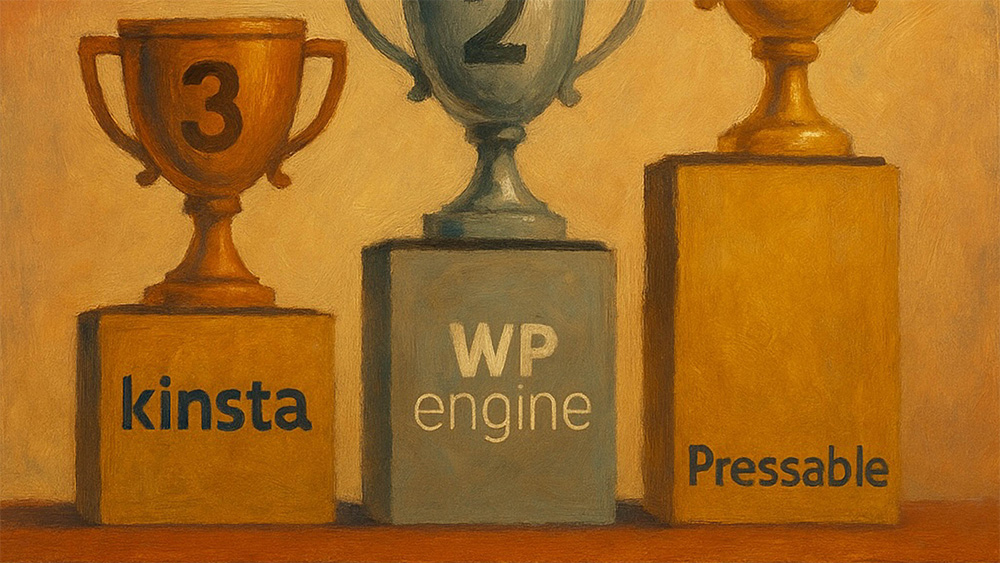
Integris Design has spent years observing how hosting providers shape client success. The agency’s experience with major platforms such as WP Engine, Kinsta, and Pressable reveals a clear lesson: consistency, transparency, and human partnership matter far more than feature lists or marketing promises.
In the early days of managed WordPress hosting, WP Engine stood out as a premium option. It offered clean dashboards, structured onboarding, and responsive support. For many agencies, including Integris Design, it represented a professionalized alternative to self-managed servers. Over time, however, that reliability began to fade. Response times slowed, transparency diminished, and support shifted toward scripted interactions. The experience became transactional rather than collaborative. What began as a partnership gradually turned into a help-desk relationship.
When Kinsta entered the market, it seemed poised to solve those issues. With strong marketing and a client-first tone, the company attracted agencies looking for something faster, simpler, and more reliable. Integris Design transitioned projects there with optimism. Initially, the support was excellent and the technology sound. But as the relationship matured, the same challenges appeared again—longer response times, ambiguous resource limits, and a lack of proactive communication. While Kinsta remained technically strong, the human layer that agencies depend on began to erode.
The pattern across both platforms reflects a larger issue in the hosting industry: as companies scale, support quality and contextual understanding often decline. Agencies managing dozens or hundreds of client sites require more than uptime—they need clarity, direct communication, and systems that don’t break under typical workloads.
That pursuit led Integris Design to Pressable, a hosting platform backed by Automattic, the creators of WordPress.com and WooCommerce. The transition was cautious, starting with test migrations to evaluate performance, support, and reliability. Early on, there were minor issues—redirects, migration quirks—but the difference was immediate. The platform ran on its own infrastructure, not a resold cloud environment, which eliminated many of the intermittent issues experienced elsewhere. Support was consistent, knowledgeable, and personal. Over time, that consistency became the defining factor.
For agencies like Integris Design, hosting is not just a technical choice; it’s a strategic partnership. The move to Pressable reduced troubleshooting time by nearly half, stabilized client environments, and restored the ability to focus on creative work rather than constant maintenance. The experience underscored a truth that applies beyond hosting: the best results come from systems designed to work together, supported by teams that actually know who you are.
Building for What’s Next
The broader takeaway for businesses is clear. The web is changing faster than ever, and the habits that once sustained digital success no longer hold. AI is rewriting the pace of production, search engines are rewriting the rules of visibility, and customers are rewriting their expectations for speed and trust. Businesses that continue to operate as they did five years ago will find themselves losing traction, sometimes without realizing it until too late.
Decline rarely begins with a crash. It starts quietly—slower traffic, fewer calls, smaller conversions. By the time the problem is visible, the foundation has already weakened. The only real solution is to take a holistic view of your digital presence. Every piece—hosting, design, SEO, content, analytics—must align under a single strategy. Each part supports the others.
That level of integration requires intentional architecture and disciplined maintenance. It cannot be achieved through piecemeal fixes or one-time projects. It requires ongoing evaluation, continuous adaptation, and partnerships that understand how all the moving pieces fit together.
Integris Design believes this is where the future of digital performance lies: in unified, holistic systems that balance automation with authenticity. The internet now rewards consistency, credibility, and craftsmanship—the very qualities that shortcuts can never replicate.
For companies that want to thrive in this environment, the goal is no longer to simply stay online. The goal is to stay aligned—technically, strategically, and creatively. Businesses that understand this won’t have to keep turning the car around. They’ll be the ones that finally reach their destination and keep moving forward.
LISTEN TO THE FULL EPISODE NOW:
When Bad Practices Collide: The New Web Crisis No One’s Talking About | Over the Bull®
Many businesses today are unknowingly stuck in a cycle of rebuilding. It’s the digital equivalent of loading up the car for a long-awaited trip, pulling out of the driveway, and hearing someone say, “I think I forgot something.” The journey stops before it even begins. For companies, that “something” is usually a weak foundation—web infrastructure,…

Many businesses today are unknowingly stuck in a cycle of rebuilding. It’s the digital equivalent of loading up the car for a long-awaited trip, pulling out of the driveway, and hearing someone say, “I think I forgot something.” The journey stops before it even begins. For companies, that “something” is usually a weak foundation—web infrastructure, marketing systems, or hosting decisions that seemed fine at the time but can’t support growth. The result is a constant process of starting over.
The internet has entered what could be described as a perfect storm. Artificial intelligence, evolving search algorithms, and two decades of corner-cutting practices have converged. What once worked is no longer viable. Cheap hosting, automated content, and template-driven design are now liabilities, not advantages. Search engines are tightening their standards, rewarding quality and relevance over quantity and speed. In this new environment, credibility—not convenience—is the differentiator.
The Perfect Digital Storm
Artificial intelligence is reshaping how people find and consume information, while search engines like Google are fighting to maintain their authority. As newer, more efficient systems emerge, the pressure to deliver accurate, trustworthy results grows. To preserve that trust, platforms are devaluing mass-produced or AI-only content. Automated blog posts, spun articles, and unoriginal filler now sink to the bottom of search rankings.
This shift has exposed how fragile much of the internet’s infrastructure really is. For years, agencies and freelancers built entire businesses on shortcuts: pre-built templates, overused plugins, and underpowered hosting solutions. It worked when search engines were less discerning, but that era is over.
The adoption of AI has also invited a wave of new entrants into digital industries—professionals from unrelated fields who have retrained and launched marketing or web development services. Some are competent; many are not. They present themselves as experts but lack the technical foundation to deliver sustainable results. For business owners, this creates a confusing marketplace where polish often masks inexperience.
The Hidden Cost of Piecemeal Systems
One of the most persistent traps in modern digital strategy is the piecemeal approach. Businesses try to save money by combining low-cost tools and services: a DIY website builder, a few free plugins, a design from a template marketplace, and a cheap hosting plan. The result may look functional at first but often lacks the structural integrity to perform long-term.
A decade ago, the web tolerated this level of inconsistency. A slow site or unoptimized local listing didn’t make or break visibility. But as competition intensified and algorithms advanced, small inefficiencies began compounding into large performance gaps. Today, even basic fundamentals—speed, mobile readiness, and name–address–phone consistency—directly affect visibility, ranking, and trust.
Integris Design has seen how this plays out repeatedly. Businesses built on disconnected systems eventually find themselves rebuilding from scratch. They didn’t fail because of poor ideas or bad products—they failed because the systems underneath were never designed to grow together. Piecemeal approaches create silos between marketing, hosting, and analytics. When one fails, everything suffers.
Lessons from the Hosting Landscape
Nowhere is this more apparent than in web hosting. Hosting is often treated as a background utility—just a place to park files—but in practice, it defines performance, uptime, security, and user experience. Many business owners assume all hosting is the same and choose based on price alone. That assumption can quietly undermine everything else.
Integris Design has spent years observing how hosting providers shape client success. The agency’s experience with major platforms such as WP Engine, Kinsta, and Pressable reveals a clear lesson: consistency, transparency, and human partnership matter far more than feature lists or marketing promises.
In the early days of managed WordPress hosting, WP Engine stood out as a premium option. It offered clean dashboards, structured onboarding, and responsive support. For many agencies, including Integris Design, it represented a professionalized alternative to self-managed servers. Over time, however, that reliability began to fade. Response times slowed, transparency diminished, and support shifted toward scripted interactions. The experience became transactional rather than collaborative. What began as a partnership gradually turned into a help-desk relationship.
When Kinsta entered the market, it seemed poised to solve those issues. With strong marketing and a client-first tone, the company attracted agencies looking for something faster, simpler, and more reliable. Integris Design transitioned projects there with optimism. Initially, the support was excellent and the technology sound. But as the relationship matured, the same challenges appeared again—longer response times, ambiguous resource limits, and a lack of proactive communication. While Kinsta remained technically strong, the human layer that agencies depend on began to erode.
The pattern across both platforms reflects a larger issue in the hosting industry: as companies scale, support quality and contextual understanding often decline. Agencies managing dozens or hundreds of client sites require more than uptime—they need clarity, direct communication, and systems that don’t break under typical workloads.
That pursuit led Integris Design to Pressable, a hosting platform backed by Automattic, the creators of WordPress.com and WooCommerce. The transition was cautious, starting with test migrations to evaluate performance, support, and reliability. Early on, there were minor issues—redirects, migration quirks—but the difference was immediate. The platform ran on its own infrastructure, not a resold cloud environment, which eliminated many of the intermittent issues experienced elsewhere. Support was consistent, knowledgeable, and personal. Over time, that consistency became the defining factor.
For agencies like Integris Design, hosting is not just a technical choice; it’s a strategic partnership. The move to Pressable reduced troubleshooting time by nearly half, stabilized client environments, and restored the ability to focus on creative work rather than constant maintenance. The experience underscored a truth that applies beyond hosting: the best results come from systems designed to work together, supported by teams that actually know who you are.
Building for What’s Next
The broader takeaway for businesses is clear. The web is changing faster than ever, and the habits that once sustained digital success no longer hold. AI is rewriting the pace of production, search engines are rewriting the rules of visibility, and customers are rewriting their expectations for speed and trust. Businesses that continue to operate as they did five years ago will find themselves losing traction, sometimes without realizing it until too late.
Decline rarely begins with a crash. It starts quietly—slower traffic, fewer calls, smaller conversions. By the time the problem is visible, the foundation has already weakened. The only real solution is to take a holistic view of your digital presence. Every piece—hosting, design, SEO, content, analytics—must align under a single strategy. Each part supports the others.
That level of integration requires intentional architecture and disciplined maintenance. It cannot be achieved through piecemeal fixes or one-time projects. It requires ongoing evaluation, continuous adaptation, and partnerships that understand how all the moving pieces fit together.
Integris Design believes this is where the future of digital performance lies: in unified, holistic systems that balance automation with authenticity. The internet now rewards consistency, credibility, and craftsmanship—the very qualities that shortcuts can never replicate.
For companies that want to thrive in this environment, the goal is no longer to simply stay online. The goal is to stay aligned—technically, strategically, and creatively. Businesses that understand this won’t have to keep turning the car around. They’ll be the ones that finally reach their destination and keep moving forward.