
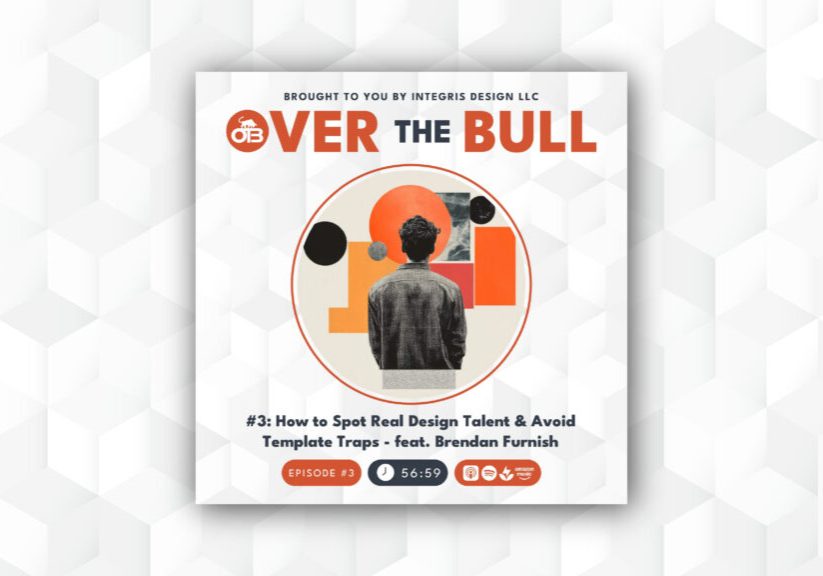
#3 – How to Spot Real Design Talent (And Avoid Template Traps) – feat. Brendan Furnish | Over the Bull®
Podcast Recap: What Makes a Real Designer Episode: What Makes a Real Designer — and Why It Matters for Your Business This episode of Over the Bull tackles one of the most persistent challenges in modern marketing: how to distinguish…

Episode: What Makes a Real Designer — and Why It Matters for Your Business
This episode of Over the Bull tackles one of the most persistent challenges in modern marketing: how to distinguish real, strategic design from shallow, cookie-cutter visuals. Host Ken Carroll sits down with veteran creative director Brendan Furnish, who brings over three decades of industry experience to the table, for an in-depth conversation about what makes design impactful—and how business owners can avoid being misled.
The Role of Design in Marketing Performance
The episode opens with a powerful insight: Google attributes up to 70% of ad performance to creative assets, and Meta estimates 56% on platforms like Facebook and Instagram. That means design is far more than aesthetics—it’s a major driver of marketing success.
Yet, many businesses undervalue it. Brendan explains how design must be rooted in strategy, storytelling, and audience psychology. The best designs aren’t just attractive—they convert, inform, and resonate with users in measurable ways.
Experience vs. Imitation: How to Spot Real Creatives
Brendan shares his journey from screen printing plants to agency leadership roles, emphasizing how traditional craftsmanship still plays a major role in digital design today. The core skills—visual planning, composition, storytelling, and communication—are timeless.
To identify a legitimate designer, he recommends asking key questions:
- Can they sketch ideas from scratch?
- Do they have experience beyond templates?
- Do they understand how design supports business goals?
- Are they fluent in industry-standard tools like Adobe Creative Suite?
- Can they articulate their strategy and walk you through their thinking?
Brendan also stresses the importance of production experience—knowing how to prep files for press, work with die lines, and deliver results that print or display correctly across mediums.
The Dangers of DIY Tools and Overpromising Agencies
Many small businesses fall prey to “designers” using DIY builders or marketplaces that offer generic, recycled solutions. The podcast warns that even flashy proposals can hide inexperience, poor skills, or outright fraud.
Ken and Brendan share real stories, including one where a marketer was discovered to be a recently released felon who couldn’t produce any original work. Their advice: insist on transparency, verify portfolios, and ask for proof of results before trusting someone with your brand.
Ultimately, great design is a long game. It comes from sweat, failure, observation, and learning across mediums and industries. Whether you’re designing a logo or building a campaign, hire based on experience, authenticity, and the ability to connect creatively with your specific audience—not shortcuts.
LISTEN NOW:
#3 – How to Spot Real Design Talent (And Avoid Template Traps) – feat. Brendan Furnish | Over the Bull®
Podcast Recap: What Makes a Real Designer Episode: What Makes a Real Designer — and Why It Matters for Your Business This episode of Over the Bull tackles one of the most persistent challenges in modern marketing: how to distinguish real, strategic design from shallow, cookie-cutter visuals. Host Ken Carroll sits down with veteran creative…
Episode: What Makes a Real Designer — and Why It Matters for Your Business
This episode of Over the Bull tackles one of the most persistent challenges in modern marketing: how to distinguish real, strategic design from shallow, cookie-cutter visuals. Host Ken Carroll sits down with veteran creative director Brendan Furnish, who brings over three decades of industry experience to the table, for an in-depth conversation about what makes design impactful—and how business owners can avoid being misled.
The Role of Design in Marketing Performance
The episode opens with a powerful insight: Google attributes up to 70% of ad performance to creative assets, and Meta estimates 56% on platforms like Facebook and Instagram. That means design is far more than aesthetics—it’s a major driver of marketing success.
Yet, many businesses undervalue it. Brendan explains how design must be rooted in strategy, storytelling, and audience psychology. The best designs aren’t just attractive—they convert, inform, and resonate with users in measurable ways.
Experience vs. Imitation: How to Spot Real Creatives
Brendan shares his journey from screen printing plants to agency leadership roles, emphasizing how traditional craftsmanship still plays a major role in digital design today. The core skills—visual planning, composition, storytelling, and communication—are timeless.
To identify a legitimate designer, he recommends asking key questions:
- Can they sketch ideas from scratch?
- Do they have experience beyond templates?
- Do they understand how design supports business goals?
- Are they fluent in industry-standard tools like Adobe Creative Suite?
- Can they articulate their strategy and walk you through their thinking?
Brendan also stresses the importance of production experience—knowing how to prep files for press, work with die lines, and deliver results that print or display correctly across mediums.
The Dangers of DIY Tools and Overpromising Agencies
Many small businesses fall prey to “designers” using DIY builders or marketplaces that offer generic, recycled solutions. The podcast warns that even flashy proposals can hide inexperience, poor skills, or outright fraud.
Ken and Brendan share real stories, including one where a marketer was discovered to be a recently released felon who couldn’t produce any original work. Their advice: insist on transparency, verify portfolios, and ask for proof of results before trusting someone with your brand.
Ultimately, great design is a long game. It comes from sweat, failure, observation, and learning across mediums and industries. Whether you’re designing a logo or building a campaign, hire based on experience, authenticity, and the ability to connect creatively with your specific audience—not shortcuts.